
Flashback – a journey through modern history and ancient cultures
I have titled this post “Flashback” because this is what I felt while embarking on a journey that took me from the modern, rich, hectic and chaotic UK to the remote, quiet and authentic lands of the South Caucasus.
The entire Caucasian region is smaller than the UK, yet there are three countries sharing this narrow piece of land (Georgia, Armenia and Arzebaijan). Not only that, this area witnesses a melting pot of languages, religions and cultures. Russian, Turkish, Persian and other influences have been absorbed into some very distinctive local traditions.
Driving across these countries has ben a rollercoaster, not just in regard to the really bad conditions of the roads, but also because of the constant switching from modernizing capitals to slow-paced countryside villages where families live off their land.
During this 10 day trip I have learnt about the struggles and the rise of these countries over the years, civil wars, occupations, genocide and oil discoveries, which I have only briefly heard about while reading a short paragraph in my history book, back in school.
The journey begins in Georgia. Tbilisi, the capital of Georgia perfectly blends the romance of the past with the futuristic spirit of it present. Tbilisi Old Town showcases leaning houses and old stones churches next to ultra-contemporary buildings, such as the Pace Bridge spanning the Mktvari River.


Traditional food is of outstanding quality. Freshly baked bread, Khachapuri, steaming dumplings and hot stews are made with local ingredients and leave your mouth full of genuine flavors. A Georgian meal is not complete if you don’t accompany these tasteful dishes with some local wine. I have learned that Georgia is one of the oldest wine regions in the world. The ancient traditional Georgian winemaking method using the Kvevri clay jars has been recognized by UNESCO in 2013. We had the pleasure to taste the wine produced by Ateni using this traditional method.


Next stop in this Caucasian trip is Lake Sevan, Armenia.
Now, reaching lake Sevan is been an adventure in itself. What looked like a 4.5hour drive from Tbilisi to Sevan on google maps, became a 7hour (struggle) drive through a country border, unpaved roads, missing signs and bumpy motorways.
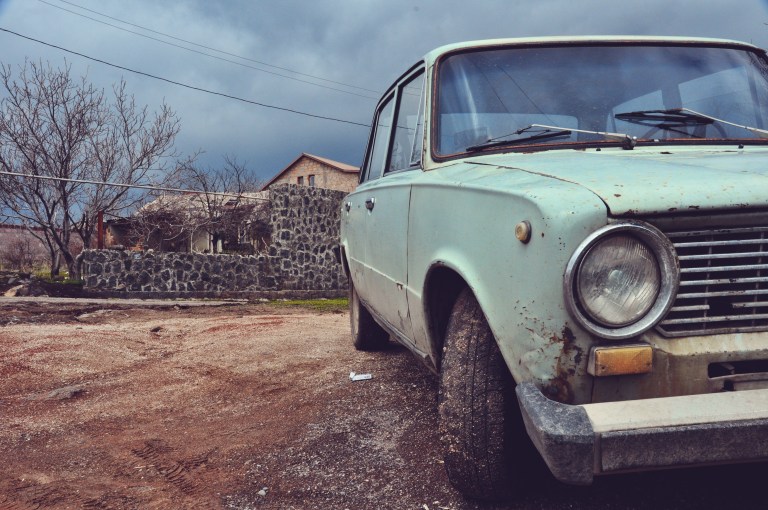
I like to describe Armenia as the symbol of the “flashback” I mentioned earlier. It’s not just because of the conditions of the roads but driving across the country shows you the real nature of its people. During our drive we came across countless Lada cars, budget cars born from a collaboration between Fiat and AvtoVAZ in the early ’70s. People drive these 40+ year old cars as if they were modern 4×4, avoiding holes and puddles along the way at the cost of driving on the opposite and definitely wrong side of the road. I was honestly shocked. We rented a 4×4 car just because we have been warned of the conditions of the roads, and yet, when we saw how people drive here we couldn’t believe what we witnessed.
Leaving this shocking experience behind, what mostly impressed me about Armenia is the landscape. Beautiful gorges, astonishing monasteries hidden away from the main roads, built on top of steep hills, facing gorges, valleys and rivers.


One of the most photographed (and for a good reason) is the Monastery we visited in Sevan, Sevanavank. This monastery is located on top of the Sevan Peninsula. A 360degree view of the (incredibly) blue lake, the Monastery and the surrounding mountains.


Our journey through Armenia wouldn’t be completed without a visit to Yerevan.
Yerevan, as opposed to the rest of Armenia is a modern, European-style city characterized by hipster bars and cafes, jazz clubs, traditional restaurants and old-fashioned teahouses. Our visit lasted for just 24 hours, but before leaving the city we decided to pay a visit to the Blue Mosque and the Armenian Genocide Memorial and Museum.


The Armenian Genocide Memorial commemorates the massacre of Armenians between 1915 and 1922 during the Ottoman Empire. It’s a place of extreme austerity and quiet and it allows you to reflect on the horror of the war and the inexplicable cruelty of humans against their brothers.
I left Armenia with a smile. Armenians are one of the most welcoming, genuine, happy, and simple people I have met in my life. They will open their doors and offer you a cup of coffee made with love and passion. This people will cook you their traditional food, from starters to desserts for a price which would be inconceivable in London. The curious look of the kids playing with his friends on the dusty roads with nothing but a broken bike gives me strength and reminds me how happiness is just about simple choices.
The experience I made in Armenia will stay with me for many years to come.


Time to drive back to Georgia, for another 7.5 hour journey, just in time to catch the train to Baku, Arzebaijan.
The train ride from Tbilisi to Baku has been uneventful, apart of the long wait at the border to check our passports and visas.
Baku is a city of extreme contrasts. Old medieval churches and mosques are paired up with ultra-modern glass skyscrapers, such as the famous Flame Towers, visible from any corner of the city.
Slick architecture defines the city landscape but without overpowering the ancient look of the old town centre.


But there is more than just Baku to discover in Arzebaijan. Once you leave the buzzing noises of the city you get to immerse yourself in the more quiet and relaxed atmosphere of the countryside. Within a 2hour drive from Baku you can reach Qobustan.
Qobustan is best known for being the home to the famous rock petroglyphs and mud volcanoes. The area has been settled since the 8th millennium BC. It is known for hosting thousands of rock engravings spread over 100 square km depicting hunting scenes, people, ships, constellations and animals. Its oldest petroglyphs date from the 12th century BC. Other mysterious attractions are the burning rocks of Yanar Dag. Yanar Dag (Azerbaijani: Yanar Dağ, meaning “burning mountain”) is a natural gas fire which blazes continuously on a hillside on the Absheron Peninsula on the Caspian Sea.


Another must-see attraction is the Bibi-Heybat Mosque. The Bibi-Heybat Mosque is a historical mosque. The existing structure, built in the 1990s, is a recreation of the mosque with the same name built in the 13th century by Shirvanshah Farrukhzad II Ibn Ahsitan II, which was completely destroyed by the Bolsheviks in 1936. Its interiors are mesmerizing. Bright green and gold tiles cover the vault and ceilings of this beautiful mosque.


Our time in the Caucasian Countries has come to an end. What I will remember the most about this trip is the warmth and welcoming spirits of the people who live there.
Despite their internal contrasts, disagreements, past tensions and present feeble equilibrium there is one thing that brings these communities together. And that is their willpower and pride to share their cultures and traditions with the rest of the world. From their traditional food to their folk music, from their natural beauty to their historical symbols.


I highly recommend visiting these three countries. Not a conventional exotic destination perhaps, but definitely one of those trips that will remind you of how lucky we are to live in countries where freedom of speech and movement, equality, professional development and exposure to other cultures is a gift we sometimes forget about.
If you made it so far, thank you for reading this post till the end. Please feel free to leave a comment if you would like to know more bout this trip and any details on accommodations and routes.
Ale
 GoldFish